
Fewer Than Ten Vaquita Remain in the Gulf
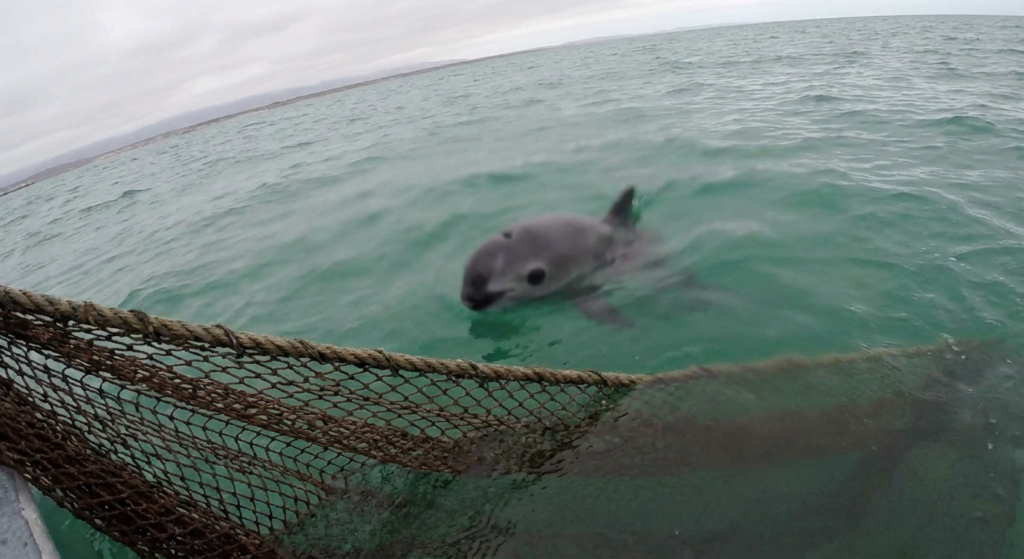
Small, elusive, and sporting dark rings around their eyes that look like permanent ink, the vaquita porpoise is disappearing from the Gulf of California. These tiny marine mammals now represent the thin edge of a biological wedge, with new acoustic surveys confirming that fewer than 10 individuals survive in the wild.
Numbers this low carry a heavy weight. We are no longer discussing a population decline in abstract terms, but rather a final count. The Gulf of California serves as the only home for the world’s most endangered marine mammal. For the vaquita, the water is not just a habitat. It is a cage of nylon mesh. Illegal gillnets, draped through the current to catch other species, have acted as a slow-motion catastrophe for decades.
Drones now hum over the saline expanses of the Gulf. Scientists have proposed these aerial observers as one of the immediate measures to prevent total extinction. Along with acoustic deterrents, these technologies aim to create a digital shield where legislative bans on gillnets have failed to provide a physical one. Enforcement remains the missing link.
Mexican authorities face mounting international pressure to close the gap between policy and practice on the water. Illegal fishing persists despite official prohibitions. The nets do not discriminate. A vaquita tangled in a mesh meant for fish cannot surface to breathe. The struggle is silent and usually fatal.
Questions still hang in the salt air. While acoustic surveys provide the data, they do not provide the cure. We do not yet know the specific success rates of these proposed drone patrols or how acoustic deterrents will impact the few remaining survivors in the long term. The economic engines driving illegal fishing operations in these coastal waters are powerful and resilient.
Ten porpoises. The number is small enough to fit in a single room, yet they are spread across a vast, turquoise bay. Each acoustic ping recorded by researchers represents a heartbeat for an entire species. Preservation in this context requires more than just sentiment. It requires a hard, technological line in the sand, or rather, in the surf, to ensure these ten do not become zero.
Scientists spend weeks on the water listening for a sound that is becoming increasingly rare. The acoustic sensors anchored to the seafloor pick up the high-frequency clicks of the porpoises as they navigate the murky depths. Every recording provides a shred of evidence that life persists. Researchers analyze these digital echoes with a mix of clinical precision and quiet desperation. The data confirms a reality that is difficult to process. We are down to the final handful of a species that helped define the biodiversity of this region.
The Gulf of California creates a unique biological pressure cooker. It is a place of immense beauty where the desert meets the sea. Beneath the surface, the vaquita shares space with the totoaba, a large fish whose swim bladder is highly prized on the black market. This demand fuels the illegal gillnet industry. When a net is set for a totoaba, it does not ignore the vaquita. The porpoise swims into the invisible wall, becomes entangled, and is unable to reach the air. Death comes through drowning in the very water that should sustain them.
Efforts to remove these nets are constant but dangerous. Removing a single net can take hours of laborious work by conservationists and navy personnel. Even as one net is pulled from the water, another is often being cast just a few miles away. The scale of the illegal activity often outpaces the resources available to stop it. This is why drone surveillance has become a central part of the new strategy. These eyes in the sky can cover vast areas of the Gulf much faster than a patrol boat. They can spot the glint of a net or the wake of a panga boat in restricted waters.
International pressure is not just a diplomatic suggestion. It is a necessary lever to ensure the protection of the vaquita remains a priority for the Mexican government. Groups from around the world are watching the Gulf. They are calling for more than just signatures on a ban. They want to see consistent, 24-hour enforcement in the zero-tolerance zone where the remaining porpoises are believed to congregate. This small area of the Gulf is the front line. If the nets can be kept out of this specific patch of water, there is a path forward for the species.
Acoustic deterrents offer another layer of protection. These devices emit sounds intended to keep porpoises away from areas where fishing might still be occurring. The technology is still being refined. There is always a risk that the sound could stress the animals or drive them into less suitable habitats. Conservation is often a choice between two difficult options. Do we intervene with technology and risk the unknown, or do we allow the status regardless of the proven lethality of the gillnets?
Local fishing communities are also part of this complicated story. Many families have depended on these waters for generations. Transitioning to vaquita-safe fishing gear is a slow and expensive process. It requires cooperation, funding, and a belief that the ocean can provide for both humans and porpoises. When the Human Fence is built correctly, the people living alongside the habitat become its greatest defenders. Without their participation, enforcement becomes an endless game of cat and mouse on the high seas.
The resilience of the vaquita is remarkable. Despite the tiny population, individuals are still being spotted. They are still breeding. They are still searching for food in the nutrient-rich waters of the upper Gulf. Nature does not give up easily. Even with fewer than ten individuals, the genetic potential for a recovery exists if the primary threat is removed. History has shown other marine mammals returning from the brink when given a fair chance at a safe environment.
Hope resides in the data and the dedicated people who refuse to look away. Every day that a vaquita is seen or heard is a victory. The proposed drone patrols represent a shift toward more proactive protection. Instead of finding dead animals in nets, the goal is to stop the nets from entering the water in the first place. This shift from reaction to prevention is the only way to safeguard the remaining survivors.
The world is watching this narrow strip of water. What happens in the Gulf of California will serve as a lesson for conservation projects across the globe. It is a test of our collective will to protect a species that provides no direct economic benefit to humans but holds an intrinsic value as a unique branch of life on earth. If we can save the vaquita, we prove that even at the final hour, recovery is possible.
Final surveys are expected to continue through the coming seasons. Each new report will be scrutinized by the international community. The number ten is a warning, but it is not yet zero. As long as those dark-eyed porpoises are clicking in the deep, the mission remains clear. We must hold the line in the surf. We must ensure that the digital shield of drones and sensors becomes a permanent reality for the elusive vaquita.
Filed by the FROM THE WILD Conservation Desk
Source: National Geographic. Read the original: https://www.nationalgeographic.com/animals/2026-vaquita-porpoise-crisis