
Coral Larvae Survival Rates Jump Seventy Percent
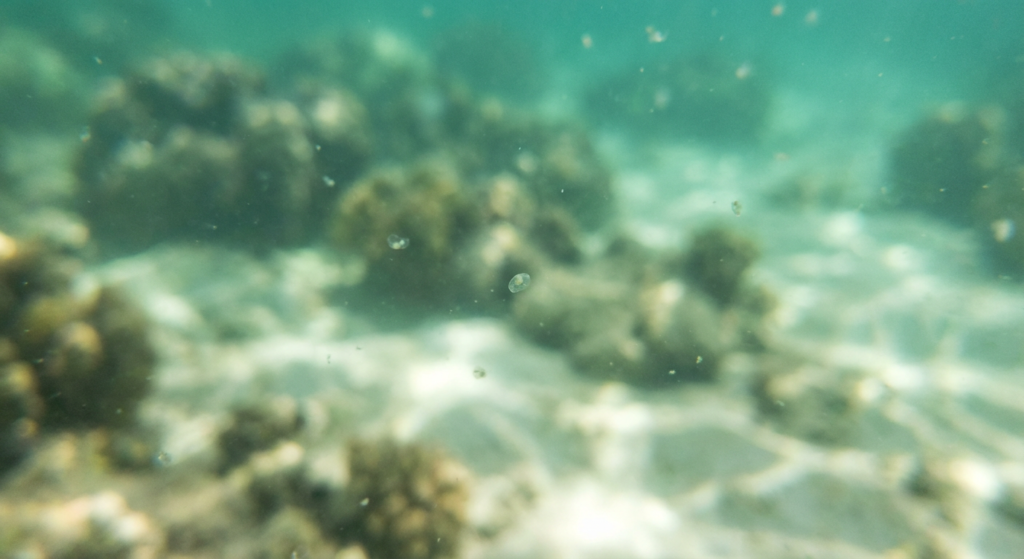
The Great Barrier Reef is currently hosting a quiet revolution within its microscopic clouds of coral larvae. These tiny drifting organisms represent the front line of a new Australian technique designed to safeguard the world’s largest reef system against the escalating pressures of bleaching events. Moving through the turquoise waters of the Coral Sea, these larvae carry the genetic blueprints for a more resilient future.
Researchers in Australia have cracked a code that long frustrated marine restoration efforts. By focusing on the earliest stages of a coral’s life, they developed a larviculture method that has increased survival rates by 70%. That number matters because the transition from a swimming larva to a fixed, living reef structure is usually a gauntlet of failure. Most never make it. This leap in survival suggests a future where reefs can be replanted with the same precision we apply to terrestrial forests.
Temperatures play a deciding role in this survival story. The breakthrough relies on two distinct but complementary approaches: cooling the water during the delicate larval stage and selectively breeding individuals that show a natural resistance to heat. It is a form of assisted evolution. Scientists are not changing the fundamental nature of the reef, but rather giving the strongest candidates a significant head start. They gather the spawn, nurture it in controlled environments, and return the winners to the wild.
The Great Barrier Reef has faced consecutive bleaching events that have tested its resilience to the limit. When water temperatures rise, corals expel the algae living in their tissues, turning bone white and risking starvation. While some reefs recover naturally, others need a hand. This new larviculture technique offers that support by ensuring the next generation of coral arrives on the seafloor ready to withstand the heat that killed their ancestors. If these heat-resistant strains take hold, they could form the backbone of a reef structure that survives even as the surrounding ocean warms beyond historical norms.
Imagine thousands of hectares of vibrant marine hotspots restored through this selective process. Australian researchers suggest this scaling is entirely possible. Moving from small-scale laboratory success to broad ocean application remains a significant logistical hurdle, yet the early data provides a rare moment of optimism for marine conservationists. The goal is to move beyond the experimental and into the industrial. We are looking at a future where specialized vessels might seed entire reef systems with millions of these high-performance larvae in a single season.
Uncertainty still floats in the water. We do not yet know exactly how these larvae will perform decades from now or if their reproductive success will match that of naturally settled corals. Scientists have not yet released data on the specific species that respond best to this cooling and breeding process. The financial cost of scaling such a precise operation across vast underwater territories remains an open question for global policymakers. Questions also remain about the long-term genetic diversity of a reef that is heavily supplemented by selective breeding.
Small victories in marine biology often ripple outward. High survival rates for young coral mean more complex habitats for fish and invertebrates. A healthy reef is a noisy, crowded, thriving city. By ensuring 70% more of these larvae survive the initial stages of life, the researchers are essentially thickening the walls of that city against the coming storms. Every additional coral that reaches maturity provides a home for hundreds of other species, from the smallest cleaner wrasse to the patrolling reef sharks that maintain the balance of the ecosystem.
The work represents a shift in how we view reef management. It moves beyond simple protection and into active, sophisticated cultivation. Results on the Great Barrier Reef suggest that the future of the ocean might involve a more hands-on partnership between human ingenuity and natural endurance. If we can successfully export this method to other marine conservation hotspots, the global impact could be staggering. This is not just a story about Australian waters, but a blueprint for coral recovery across the tropics.
A single coral colony produces millions of eggs during a spawning event, yet in the chaotic environment of the open sea, the vast majority are consumed by predators or drift into deep, cold waters where they cannot settle. By intervening in this specific window of vulnerability, researchers have found the most effective lever for population recovery. These are the first few weeks of life where the greatest losses occur. By providing a safe harbor during this time, the larviculture technique turns a game of chance into a calculated strategy for survival.
The selective breeding component of the program identifies individual corals that have already survived heat stress events. These reef survivors are the donors for the next generation. It is a process of identifying winners and magnifying their influence on the reef’s future. Cooling the larvae during their development acts as a stabilizer, ensuring they reach their target settlement sites with their energy reserves intact. These are the tiny architects of the future, and for the first time, they have the wind at their backs.
As this technology scales, the focus will shift to how the Human Fence can support these efforts. Communities that rely on the reef for their livelihoods are often the most effective guardians of these restoration sites. Local divers, tourism operators, and traditional owners can provide the eyes and ears on the water necessary to monitor these new colonies as they grow. Conservation is becoming a participatory act, where the laboratory meets the local community.
The success seen so far is a call to action. While no single technique can stop the warming of the oceans, having a tool that increases coral survival by 70% provides a massive advantage. It buys us time. It ensures that when we finally solve the broader atmospheric challenges, there is still a vibrant, living reef left to save. The work in the Great Barrier Reef is a beacon for what is possible when we stop mourning what is lost and start building what comes next.
Source: ScienceDaily. Read the original: https://www.sciencedaily.com/releases/2026/04/260401-coral-restoration-breakthrough.htm