
A New Rhythm for the Sumatran Rhinoceros
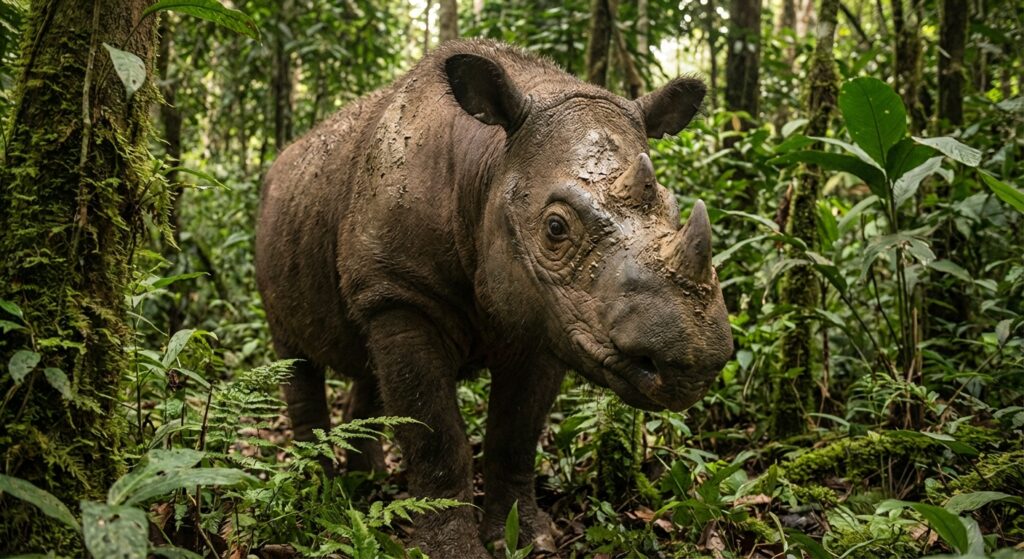
Thirty. That is the number currently defining an entire species. These thirty individual Sumatran rhinoceroses move through the thick undergrowth of Indonesia and Malaysia, their existence balanced on a knife edge. The humid air of the rainforest muffles their footsteps, yet their presence resonates through the latest reports from conservation biologists. According to data shared at https://www.asianspeciesconservation.org/sumatran-rhino-2026, this small population has finally shown signs of stabilization.
Rain drips from the canopy onto the forest floor. While the count remains low, the halt in decline marks a shift in the trajectory of a species long considered to be on the brink. This change stems from an intensive new breeding and protection program. By coordinating efforts across national borders, biologists work to ensure that the remaining rhinos do not simply vanish into the green expanse.
Stability does not mean safety. The species holds a critically endangered status, a label that carries the weight of history and the pressure of the future. Success for this program isn’t measured in thousands or even hundreds of animals yet. It is measured in the absence of loss. If the population stops shrinking, the possibility of a future remains open.
The program operates with an intensity born of necessity. Because the animals are spread across two different countries, the logistics of protection and breeding require a level of cooperation that allows for consistent monitoring. In the past, the isolation of these rhinos often hindered their ability to find mates. Now, human intervention bridges those gaps. The program’s success is tied directly to the survival of the species, as noted at https://www.asianspeciesconservation.org/sumatran-rhino-2026. Every individual matters when the total count rests at thirty.
Biologists have not detailed the specific methods used within these sanctuaries. Whether they rely on natural pairings or more technical interventions remains an open question for those following the program. There is a sense of quiet observation. We do not yet know the exact locations where these thirty rhinos reside, only that they are protected within the borders of Indonesia and Malaysia. This lack of specific geography serves as a shield against those who might disturb the animals.
The silence of the forest is now a sign of work being done. It is a slow process. Biology moves at its own pace, indifferent to the urgency of human timelines. Stabilization is a plateau, a moment where the downward slide stops and the ground levels out. It provides a foundation. Without this pause, there would be no room for the next steps in conservation.
What happens when a population hits such a low number? Thirty individuals represent a thin thread of genetic diversity. The program must navigate this narrow corridor with precision. The stabilization reported at https://www.asiansspeciesconservation.org/sumatran-rhino-2026 suggests that the current protective measures are functioning as intended. Security teams and researchers work to manage the environment, ensuring that the rhinos can exist without the external pressures that previously drove their decline.
Hope in conservation often looks like a flat line on a graph. It is the end of a tragedy and the beginning of a long, quiet wait. For the Sumatran rhinoceros, that wait is underway in the forests of Southeast Asia. The intensive program has provided a breather. It has bought time for the thirty survivors. The trees still stand, the rain still falls, and for now, the rhinos remain.