
Assessing the Ecological Boundaries of Global Tree Planting
A canopy of broad leaves in the humid tropics offers more than shade. It functions as a dual engine for the planet. New research indicates that these tropical and subtropical moist broadleaf forests represent the most effective environments for simultaneous carbon storage and species preservation. The study suggests that geography dictates the success of any forest restoration effort. Not all earth is meant to hold a forest.
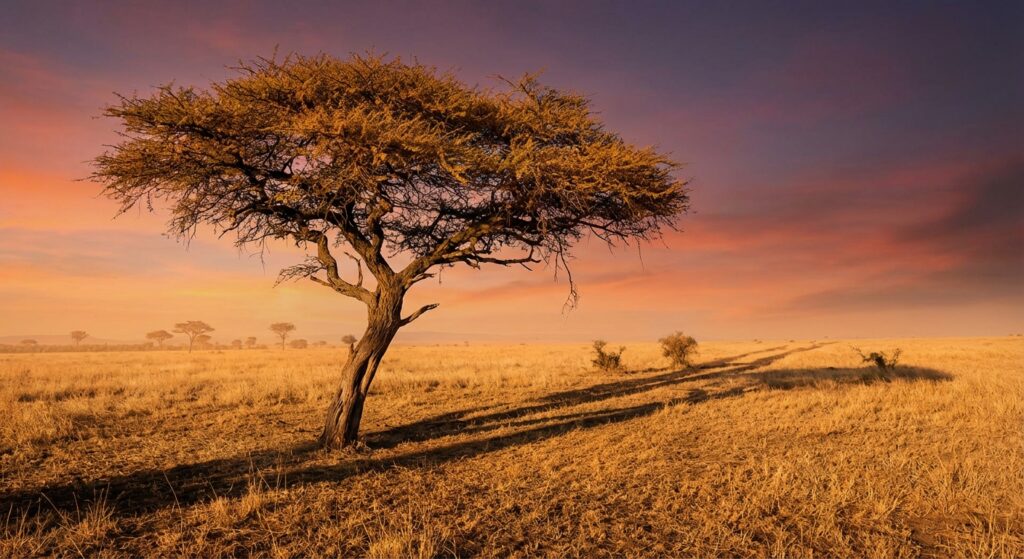
Planting a sapling seems like a universal good. However, when those saplings enter the soil of a natural grassland or a sprawling savanna, the ecological logic begins to fray. These open ecosystems possess their own established carbon sequestration pathways. Shoving trees into a landscape that evolved to be treeless often backfires. The result is often the displacement of native species that rely on open horizons and specific sunlight levels.
The research highlights a recurring friction between climate goals and biological variety. Large scale afforestation can sequester carbon, yet it can also act as an invasive force if mismanaged. In the savanna, the soil and the grass already manage carbon in a stable cycle. Introducing a dense forest cover can disrupt this balance. It turns a carbon sink into a site of ecological displacement.
Mistakes in planning lead to immediate consequences for local wildlife. Some species require the specific heat and light found only in open plains. When these areas are converted into artificial woodlands, those animals lose their homes. Biodiversity suffers even as the tree count rises. The study makes it clear that the best outcomes occur when we respect the original map of the natural world.
The tropical moist broadleaf forest stands out as the gold standard for these projects. In these regions, the climate benefits and the needs of rare species align almost perfectly. It is a rare moment of synergy in a complex global struggle. Outside of these specific biomes, the trade offs become more severe and much harder to justify.
Questions remain regarding the specific scale of these impacts across different continents. While the study clarifies which biomes are most at risk, it does not name the specific nations or regions where the most significant failures are currently occurring. We know the broad categories of the land. We know the risks to the carbon cycles. Yet, the exact tonnage of carbon lost or gained during these transitions remains part of the data gap that researchers are still trying to bridge.
A sapling in a rainforest is a continuation. A sapling in a grassland can be an intrusion. The distinction is everything. Global efforts to restore greenery must account for the reality that a tree in the wrong place is just another form of environmental disruption.
Source: https://news.mongabay.com/2026/03/study-maps-tree-planting-risks-and-rewards-for-climate-and-biodiversity/